
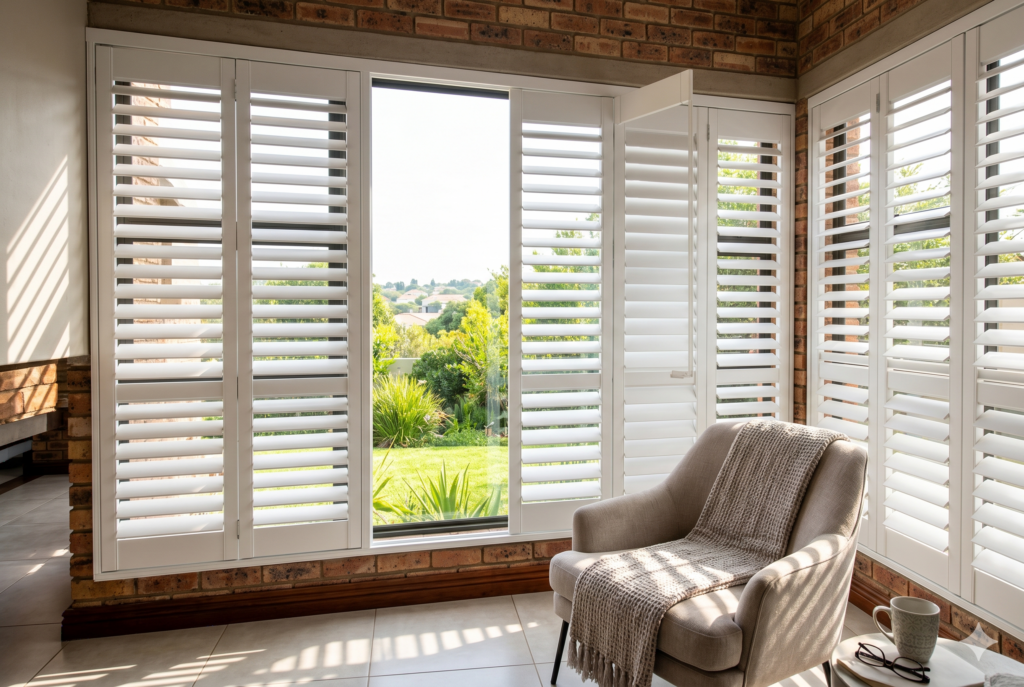
The optimal shutter configurations rely on extruded polyvinyl chloride, engineered hardwoods, and structural aluminium cores to maintain rigid light control. Selecting the correct louvre specifications guarantees maximum thermal resistance against high ultraviolet exposure. Accurate frame alignment determines the structural longevity and operational lifespan of the entire window covering assembly.
What Are Shutter Blinds?
Interior shutters and shutter blinds are fixed-frame window coverings constructed from solid horizontal slats called louvres. Unlike suspended cable blinds, plantation shutters utilise a rigid mortise and tenon frame construction that anchors directly into the structural reveal of your window. The mechanism operates through a central or hidden tilt rod which connects the louvres. This mechanical linkage ensures synchronized rotation to regulate light transmission and air velocity.
Structural Components and Engineering
A standard shutter rigid framework consists of vertical stiles and horizontal rails that prevent diagonal sagging, with high-density polymer or composite models featuring internal aluminum reinforcement to stop thermal deformation under intense heat.
Overlapping, aerodynamic louvre profiles create a tight barrier against light and heat transfer, allowing these mechanically rigid configurations to double as effective blackout shutters. Ultimately, this specialized engineering ensures smooth operation while adding a layer of thermal resistance and passive security to the building envelope.
Top Benefits of Upgrading to Shutter Blinds in Your Home
Solid shutters act as high-performance barriers that improve your home’s efficiency, privacy, and security. Their rigid construction offers far more protection and durability than standard fabric blinds.
- Thermal Insulation: Blocks winter cold and reflects summer heat to lower energy costs.
- Structural Resilience: Solid frames resist wear and outlast corded systems.
- Acoustic Dampening: Thick materials absorb outside noise from traffic and neighbors.
- Light Control: Tight-fitting slats allow for near-total darkness in bedrooms or media rooms.
- Passive Security: The sturdy physical barrier helps deter intruders.
These benefits create a more comfortable and secure living environment while adding permanent value to your home.
Choosing the Right Material: Wood vs. Faux Wood Shutters
Choosing the right shutter material requires balancing environmental needs with structural durability. Lightweight and strong natural wood (like Basswood or Paulownia) is ideal for wide window spans in dry rooms but prone to warping in high moisture.
Conversely, completely waterproof and metal-reinforced faux wood or composites excel in humid spaces like bathrooms, though their heavier weight demands smaller panels to prevent hinge strain. Matching these material strengths to your room’s specific climate ensures a beautiful, long-lasting installation.
How to Measure and Install Window Shutter Blinds
Precise installation is critical, as a two millimetre deviation can cause mechanical failure. Proper measurement and substrate anchoring ensure the panels remain flush and operational.
- Measurement: Record dimensions at three horizontal and vertical points. Use the smallest value for manufacturing.
- Substrate: Anchor directly into brick or concrete or use specialized toggles for plasterboard to support the frame’s weight.
- Mounting: Choose between inside mounts for flush fits, outside mount for shallow reveals, or direct mount for tight clearances.
- Alignment: Perform precision levelling during the final anchoring phase to prevent hinge sagging and ensure perfect closure.
These technical installation steps ensure your shutter system remains a durable and perfectly aligned architectural feature for years to come.
Shutter Blinds vs. Traditional Blinds: Which Is Best for You?
Choosing between shutter blinds and traditional blinds comes down to life-cycle costs and mechanical stability. Traditional blinds rely on a single top-mounted headrail, flexible cords, and unsupported slats that rapidly degrade from UV exposure, friction, and wind.
In contrast, rigid shutter systems eliminate these flexible points of failure by using fixed operational hardware, and a four-sided frame anchored directly into the masonry, which distributes weight evenly to drastically reduce system failures.
Analysing Shutter Blinds Cost
Shutter blinds are a permanent architectural investment that offers superior long-term value compared to disposable window treatments. While the upfront cost is higher, the expenditure is justified through several key financial benefits:
- Durability: Rigid construction outlasts traditional suspended blinds by decades, eliminating frequent replacement cycles.
- Efficiency: Improved thermal insulation reduces monthly electrical consumption for climate control.
- Property Value: High-quality shutters function as a fixed asset that enhances the overall valuation of the property.
The combination of energy savings and the removal of future repair costs ensure a significant return on investment over the life of the installation.
Precision Solutions with Jacobs Blinds
Executing a flawless window covering strategy requires exact material selection and rigorous installation standards. Jacobs Blinds engineers’ solutions using top-tier hardwoods, reinforced polymer extrusions, and robust hardware to match the specific thermal and structural demands of your property.
We bypass generic fittings to deliver millimetre-perfect configurations that withstand harsh South African ultraviolet exposure and extreme temperature variants. Explore our full range of industrial solutions on our website.
FAQs
What is the difference between shutter blinds and plantation shutters?
Shutter blinds is a general category for rigid slatted coverings, while plantation shutters specifically feature wide, aerodynamic elliptical slats fitted into a permanent structural frame.
Do shutter blinds completely block out light?
They offer high light attenuation but are not total blackout systems. Minor light bleed occurs at the frame tolerances unless you specify overlapping louvres and light-stop frame extensions.
How much do custom shutter blinds typically cost?
Pricing is determined by material, size, and frame complexity. Extruded PVC units are the most affordable, while engineered hardwoods and reinforced aluminium occupy the premium price range.
Are shutter blinds energy efficient and good for insulation?
Yes. The interlocking louvres and rigid frame create an insulating air pocket that reduces conductive heat transfer, prevents winter thermal loss, and reflects summer solar radiation.