
Key takeaways
- Blackout blinds use tightly woven, often coated fabrics to stop almost all incoming light and block the outside view for privacy.
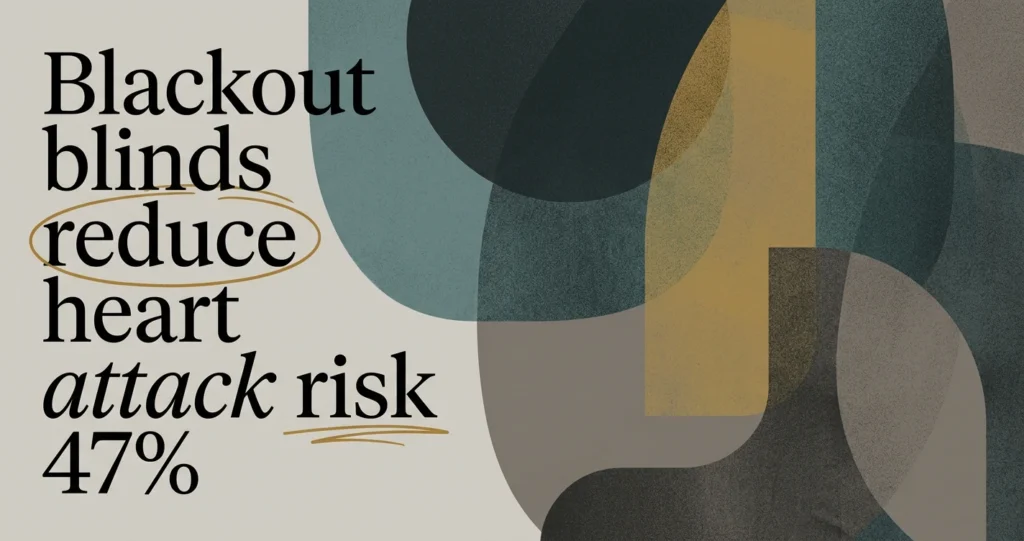
- A 2025 Harvard-reported study of 88,905 people linked the brightest nighttime light exposure to a 47% higher heart attack risk, which is why darkness matters.
- Light gaps around the edges undo most of the benefit, so a close fit, a wider mount, and side channels or a pelmet are what deliver real darkness.
- Bedrooms, nurseries, shift-workers' rooms, and media rooms gain the most from a full blackout treatment.
Blackout blinds are window coverings made from dense, usually coated fabric that stops nearly all light from passing through, giving you a dark, private room. They work best in bedrooms, nurseries, and media rooms, where darkness improves sleep and the solid fabric hides the inside of your home from the street.
This guide explains how blackout blinds block light and heat, which fabrics and fittings get you true darkness, the rooms that benefit most, how to pair them with your decor, and the installation details that stop light leaking around the edges.
How Do Blackout Blinds Block Light and Heat?
Blackout blinds block light with a tight weave and an opaque backing, so very little passes through the fabric itself. The same density also reflects and absorbs solar heat, which keeps a sunny room cooler in summer and holds warmth in on cold Cape nights.
Darkness is worth the effort. In a 2025 study of 88,905 adults reported by Harvard, people with the brightest nighttime light exposure had a 47% higher risk of heart attack than those in darker conditions, alongside higher risks of coronary artery disease and heart failure (Harvard Gazette, 2025). Keeping a bedroom dark is one of the simplest ways to protect rest.
On the heat side, a dense blind sits between the glass and the room and reduces how much sun reaches your furniture and floors. Light-coloured and reflective-backed fabrics push more of that heat back outside, which matters in homes that catch the afternoon sun.
There is a privacy benefit built into the same fabric. Because light cannot pass through a true blackout cloth, people outside cannot see shapes or movement through a lit window at night. A sheer or a standard roller still shows silhouettes after dark, so the solid face of a blackout blind is what keeps a ground-floor bedroom or street-facing room genuinely private.
Which Fabrics and Fittings Deliver Full Darkness?
Full darkness comes from the fabric, the fit, and the way light is sealed at the edges. A genuine blackout fabric is tightly woven and often has a coated or foam backing that light cannot pass through, which is what separates it from a standard dim-out or room-darkening cloth.
The fitting style changes how well that fabric performs:
- Roller blinds give a clean, flat sheet of blackout fabric with few gaps across the glass.
- Roman blinds fold up softly and suit a warmer, more tailored look while still using a blackout lining.
- Honeycomb (cellular) blinds trap a layer of air in their cells, which adds to both darkness and insulation.
- Side channels or guide rails run down each edge of the window and close the thin gaps where light usually sneaks in.
A pelmet or a cassette headbox over the top of the blind blocks the strip of light that often escapes above the roller. One point worth knowing: a fabric labelled "room darkening" is not the same as "blackout". Room-darkening cloth dims a space but still lets a soft glow through, while a true blackout fabric is built to stop that glow. If total darkness is the goal, confirm the fabric is rated blackout, not just dim-out, before you order.
Which Rooms Benefit Most From Blackout Options?
Bedrooms gain the most, because darkness supports the melatonin your body releases to fall and stay asleep. A room that stays dark from streetlights, early summer sunrises, and passing headlights gives you steadier, deeper rest.
Nurseries and children's rooms are the next clear case. Young children often need to sleep while it is still light outside, and a dark room helps daytime naps and early bedtimes hold. Shift workers who sleep during the day face the same problem and feel the biggest difference once the room goes properly dark.
Media rooms and home offices round out the list. A blackout blind cuts glare on screens and makes a projector or television far easier to watch in the daytime. For a wider look at pairing light control with comfort in the room where you sleep, see our guide to the best blinds for bedrooms.
How Do You Combine Blackout Blinds With Your Decor?
You keep the room-darkening job hidden and let the visible fabric carry the style. Blackout rollers, Romans, and honeycombs come in a wide range of colours, textures, and finishes, so the blind can read as a design choice rather than a blackout fix.
A few approaches work well:
- Match the wall tone for a calm, seamless look that makes a small room feel larger.
- Pick a contrast colour when you want the window to stand out as a feature.
- Layer with a sheer or a dress curtain so you get daytime softness and privacy, with the blackout blind doing the heavy lifting at night.
Texture matters as much as colour. A woven-look blackout fabric suits a relaxed coastal home, while a flat, matte roller fits a modern, minimal space. The point is that a dark, functional lining can sit behind almost any front face you choose.
Hardware is part of the look too. A slim cassette can be powder-coated to match the window frame, and motorised blackout blinds remove the cords for a cleaner line and safer rooms for children. Small choices like these let the blind read as part of the room rather than an add-on bolted over the glass.
What Installation Tips Prevent Light Gaps?
Careful measuring and mounting prevent light gaps, which is where most blackout installations fall short. The fabric can be flawless, yet a 10mm gap down each side will throw a bright line across the room at sunrise.
Three details make the difference:
- Mount outside the recess where you can, so the blind overlaps the frame on all four sides instead of sitting inside it.
- Add side channels for an inside mount, which seal the edges that an in-recess blind leaves open.
- Fit a pelmet or cassette at the top to close the gap above the roll.
Accurate sizing underpins all of this, so measure twice before you order. Our step-by-step guide on how to measure windows for blinds accurately walks through recess versus face fits and the common mistakes to avoid. An outside mount should overlap the opening by roughly 50mm to 75mm on each side and above the frame, which hides the edge gaps that an exact-size blind leaves behind.
The level of the mounting also counts. A blind fitted even slightly crooked opens a wedge of light along the bottom rail, so brackets need to sit true and the bottom bar needs to rest flush against the sill. For homes in the Cape Peninsula, a professional measure and install is the surest route to a room that goes properly dark, because the installer sets the brackets, channels, and pelmet to work together as one sealed unit.
If better sleep or daytime privacy is your goal, start by deciding which room matters most, measure that window, and choose a blackout fabric with a fitting style that seals the edges. Jacobs Blinds and Shutters can measure, supply, and install the right blackout option for your home or office across the Cape Peninsula.
Frequently asked questions
Do blackout blinds block 100% of light?
The fabric itself can block close to all light, but thin gaps at the sides, top, or bottom let light leak in. A snug fit with side channels or an outside mount that overlaps the frame gets you much closer to total darkness.
Are blackout blinds good for sleep?
Yes. A dark room supports natural melatonin production and helps you fall and stay asleep. Keeping light out at night is a simple, lasting change to your sleep environment.
Do blackout blinds help with heat?
They help. A dense, light-coloured or reflective-backed blind blocks a good share of the sun's heat in summer and slows heat loss through the glass in winter, easing the load on your cooling and heating.
Can blackout blinds still look stylish?
Yes. Blackout fabric comes in rollers, Romans, and honeycomb cells in many colours and textures, so you can match almost any decor while keeping the room-darkening lining hidden from view.